The problem
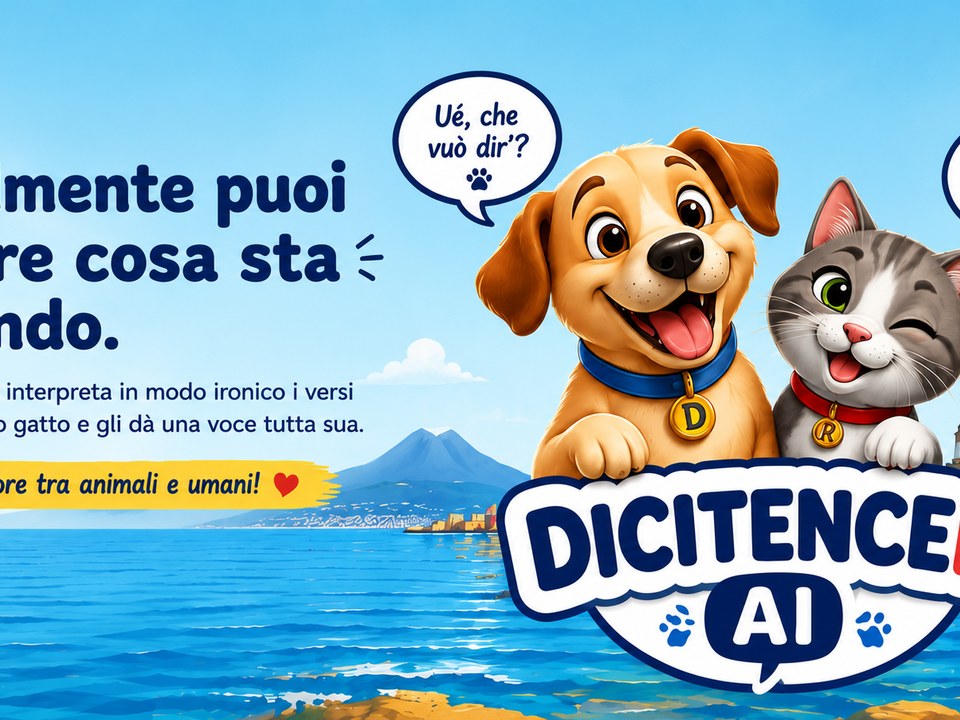
Every pet owner has wondered what that bark really meant. The apps that claim to translate pets are either toys with canned jokes or they promise a science that does not exist. The idea behind Dicitencell AI was to be honest and funny at the same time. It is an interpreter that admits it is guessing, reads the context, and answers in Neapolitan. It also had to be ready to grow into a paid app and an iOS app.
What I built
I built a web app where you record your pet, and the app tells you what it “said”, with a straight face and a punchline.
- Animal to human — record up to 15 seconds in the browser and pick a context. The engine returns an emotion, a probable intent, a serious reading of the behaviour, a one-line joke in Neapolitan, a confidence score and a safety note when one is needed.
- Human to animal — type what you want to say and get advice on tone, gesture and a short command, plus a synthetic bark or meow. The sounds are synthesised in code and clearly labelled as a simulation.
- Seven levels of Neapolitan — from “Light” to “Neighbourhood dog” and “Aristocratic cat”.
- Pet profiles — photos, breed, character and habits feed straight into the prompt, so a lazy cat and a hyper puppy do not get the same line. A translation history and a six-step onboarding complete the flow.
- Swappable AI engine — the app talks to one interface. The Claude adapter asks for strict JSON and validates it with Zod. If the key is missing or the answer is malformed, a simulated engine takes over, so the user always gets an answer.
- Admin panel — users and API keys are managed from the app. Settings for the ElevenLabs voice and Stripe payments are already in place for the next phase.
Built with
Next.js 14 with the App Router, strict TypeScript, React 18 and Tailwind CSS. Supabase provides Postgres, authentication and storage. The schema has 15 tables, all with row-level security, so users can only read their own pets and translations. AI runs on Anthropic Claude through the official SDK, on the server only. Zod validates inputs and AI output; Vitest tests cover the engine.
Why it was done this way
I built it API-first. All the logic lives in server services behind REST routes, and the web interface is just one client. The planned SwiftUI app for iPhone will call the same routes instead of rewriting the logic. Paid access works the same way: an internal plan (free, premium, admin) lives in the database, and Stripe or StoreKit only sets it.